


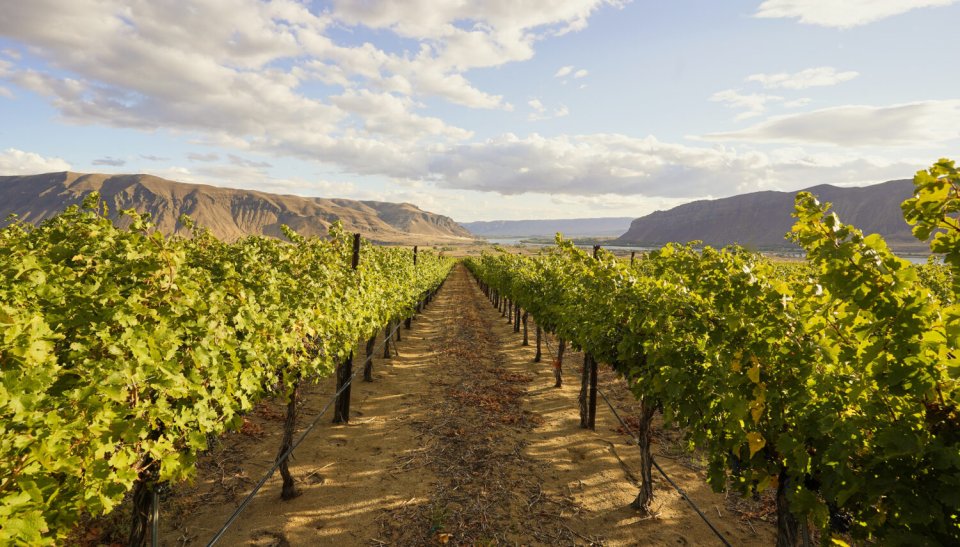
DESCRIPTION: The Ancient Lakes of the Columbia Valley AVA is dominated by white varieties, which thrive in its northerly location.
LOCATION: Central Washington
DESIGNATED: 2012
TOTAL SIZE: 162,762 acres
TOP VARIETIES: Riesling
SOILS: Fine sand along with silt and sandy loam
AVERAGE ANNUAL PRECIPITATION: 6 inches
TWO THINGS TO KNOW:
> One of the only
appellations in Washington planted more to white varieties than
red.
> Its northern
location and higher elevation affect the resulting wines.
DESCRIPTION: Beverly, Washington is defined by its high heat, elevated winds, and extremely well-drained soils. The winds are due to the appellation’s proximity to Sentinel Gap, which lies two miles to the south.
LOCATION: South-central Washington
DESIGNATED: 2024
TOTAL SIZE: 2,415 acres
TOP VARIETIES: Cabernet Sauvignon
SOILS: Deep to very deep, excessively drained soils formed by glacial outwash, alluvium, and sand.
AVERAGE ANNUAL PRECIPITATION: 5 inches
TWO THINGS TO KNOW:
> One of the state’s warmest and driest growing regions.
> Known for its elevated winds an excessively well-drained soils.

DESCRIPTION: The Candy Mountain AVA is part of a series of four mountains in the area, which also include Red Mountain, Badger Mountain, and Little Badger Mountain, that are collectively referred to as ‘the rattles’ due to their alignment with the larger Rattlesnake Mountain.
LOCATION: South-central Washington
DESIGNATED: 2020
TOTAL SIZE: 815 acres
TOP VARIETIES: Cabernet Sauvignon
SOILS: Loess, windblown silt and sand, ice age flood sediment
AVERAGE ANNUAL PRECIPITATION: 5 inches
TWO THINGS TO KNOW:
> Candy Mountain is currently the smallest appellation in Washington.
> Its proximity to Red Mountain give it similarities to that esteemed appellation.

DESCRIPTION: The Columbia Gorge AVA is the western-most appellation in eastern Washington. It is perhaps the most diverse appellation in the state, with dramatic differences east-to- west in precipitation, heat accumulation, and soil composition.
LOCATION: South-central Washington & north central Oregon
DESIGNATED: 2004
TOTAL SIZE: 191,000 acres
TOP VARIETIES: Chardonnay, Pinot Noir
SOILS: Silt loam
AVERAGE ANNUAL PRECIPITATION: 10-36 inches
TWO THINGS TO KNOW:
> The western-most appellation in eastern Washington.
> It is known for its diversity of climate, aspects, and soil types.

DESCRIPTION: The Columbia Hills appellation lies between The Burn of the Columbia Valley to the east and the Columbia Gorge to the west. The growing region’s defining characteristic is its proximity to the Columbia River.
LOCATION: South central Washington
DESIGNATED: 2026
TOTAL SIZE: 29,387 acres
TOP VARIETIES: Cabernet Sauvignon
SOILS Shallow wind-deposited silt and sand overlying flood-deposited gravels and basalt bedrock
AVERAGE ANNUAL PRECIPITATION: 10 inches
TWO THINGS TO KNOW:
> Fully 80% of the appellation lies within a mile or less of the Columbia River.
> The appellation is lower lying than most in eastern Washington, with elevations ranging from 74 feet to 1,050 feet above sea level.

DESCRIPTION: Encompassing more than a quarter of the state, the Columbia Valley AVA is by far Washington’s largest growing region at 11+ million acres. It is home to over 99% of all of Washington’s vinifera acreage.
LOCATION: Central, south-central, and south-eastern Washington and north-central Oregon
DESIGNATED: 1984
TOTAL SIZE: 11 million acres
TOP VARIETIES: Cabernet Sauvignon, Chardonnay, Merlot, Riesling, Syrah
SOILS: Loess overlying gravel and slackwater sediment with a basalt bedrock
AVERAGE ANNUAL PRECIPITATION: 6-8 inches
TWO THINGS TO KNOW:
> Over 99% of Washington’s acreage is planted in Columbia Valley.
> A rain shadow makes it an arid and semi-arid desert, ideal for grape growing.

DESCRIPTION: The main distinguishing feature of the Goose Gap AVA is the orientation of Goose Mountain’s ridge crest, which runs east-west. By comparison, ridge crests of nearby Red Mountain, Candy Mountain, and Rattlesnake Mountain run northwest to southeast.
LOCATION: South-central Washington
DESIGNATED: 2021
TOTAL SIZE: 8,129 acres
TOP VARIETIES: Cabernet Sauvignon, Merlot, Syrah, Chardonnay
SOILS: Warden series, windblown silt and fine sand overlying Missoula Flood sediment
AVERAGE ANNUAL PRECIPITATION: 6 inches
TWO THINGS TO KNOW:
> Goose Mountain’s orientation differs from other mountains in the area.
> This difference gives the fruit a mixture of Red Mountain and Yakima Valley profiles.

DESCRIPTION: Located in south-central Washington and part of the larger Columbia Valley, the Horse Heaven Hills AVA is a warm, windy region that is home to over a quarter of Washington’s planted acreage.
LOCATION: South-central Washington
DESIGNATED: 1983
TOTAL SIZE: 665,600 acres
TOP VARIETIES: Cabernet Sauvignon, Merlot, Chardonnay
SOILS: Deep silt-loam over basalt bedrock and gravel
AVERAGE ANNUAL PRECIPITATION: 8 inches
TWO THINGS TO KNOW:
> The Horse Heaven Hills is a warm, windy region.
> It is home to one-quarter of Washington’s wine grape acreage.

DESCRIPTION: The Lake Chelan AVA is one of the only Columbia Valley sub-appellations that does not have basalt bedrock. It also has a unique climate, due to its location and the ‘lake effect.’
LOCATION: North-central Washington
DESIGNATED: 2009
TOTAL SIZE: 24,040 acres
TOP VARIETIES: Syrah, Pinot Noir, Chardonnay, Pinot Gris, Merlot, Riesling
SOILS: Glacial sediments along with ash and pumice
AVERAGE ANNUAL PRECIPITATION: 11 inches
TWO THINGS TO KNOW:
> Lake Chelan is one of the only appellations that does not have basalt bedrock.
> It has a unique climate, due to its location and the ‘lake effect.’

DESCRIPTION: The Lewis-Clark Valley AVA is a young appellation but with a long grape growing history. The appellation is defined by steep canyons and low benchlands.
LOCATION: South-eastern Washington and north-western Idaho
DESIGNATED: 2016
TOTAL SIZE: 306,658 total acres, 85,864 in WA
TOP VARIETIES: Chardonnay, Pinot Noir, Merlot
SOILS: Loess and Mollisols from bunchgrass roots
AVERAGE ANNUAL PRECIPITATION: 11-22 inches
TWO THINGS TO KNOW:
> Lewis-Clark Valley is a young appellation but with a long grape growing history.
> The appellation is defined by steep canyons and low benchlands.

DESCRIPTION: The Naches Heights AVA is located on a million-year-old lava flow above the Missoula Floods, with andesite bedrock. Its elevation and proximity to the Cascades make it cooler and wetter.
LOCATION: South-central Washington
DESIGNATED: 2011
TOTAL SIZE: 13,254 acres
TOP VARIETIES: Pinot Gris, Riesling, Gewürztraminer, Syrah
SOILS: Windblown loess and clay
AVERAGE ANNUAL PRECIPITATION: 10-13 inches
TWO THINGS TO KNOW:
> Naches Heights is located on a 1M year-old lava flow above the Missoula Floods.
> Its elevation and proximity to the Cascades make it cooler and wetter compared to nearby appellations.
